
Drain Cleaning and Sewer Line Clearing in Elyria, OH
Slow and clogged drains, floor drain backups, blocked vents and main sewer lines in homes, rentals and businesses.
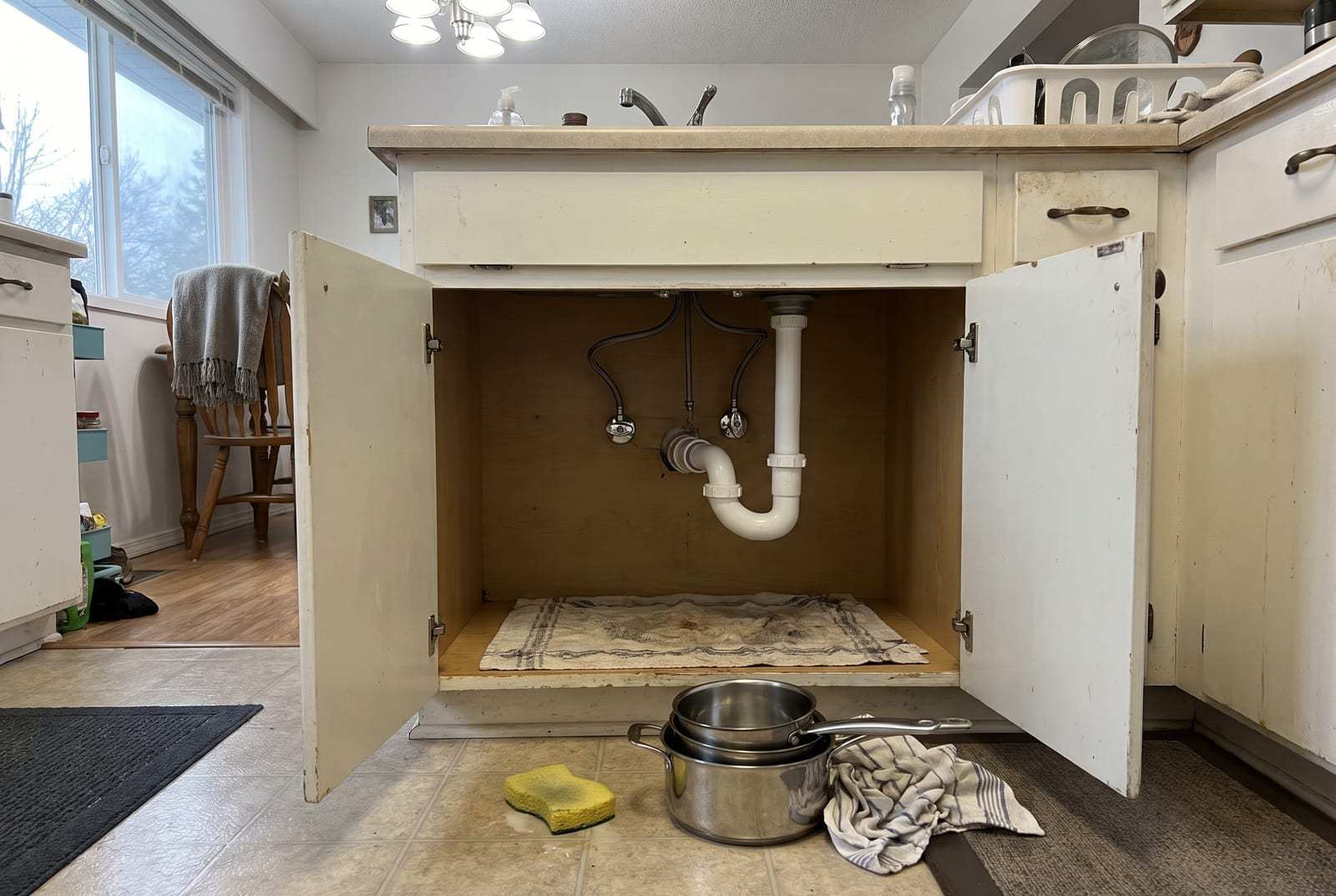
Every drain in a building runs downhill into a larger pipe, and all of them end in the main sewer line to the street. Where a clog sits in that system decides how it shows up and how it is cleared, and some slow drains turn out not to be clogged at all.
Most clogs start near a fixture, in the trap that holds water to keep sewer gas out or in the short branch line behind the wall. Those are cleared by opening the trap or running a hand cable. A toilet takes a closet auger, which reaches through its built-in trap without scratching the bowl.
One Slow Drain or Every Drain in the House
Run water in a few other fixtures and watch the lowest drains, such as a basement floor drain. One slow drain with the rest normal means a clog in that fixture’s trap or branch line. Water rising in a lower drain while another fixture runs, or every drain slowing at once, means the main line is blocked. That one should not wait: water that cannot leave the house comes back up at the lowest opening.
Drain Symptoms, Likely Causes and Next Steps

Slow draining, gurgling, a smell or water rising where it should not each point to a short list of causes, and where the sign shows up narrows the list.
A plumber usually starts at the fixture with the problem and works toward the main line, so note which drains are affected and when. On a line that keeps clogging, a camera run through the pipe shows whether roots, a sag or a break is behind it.
-
Kitchen sink drains slowly or backs up into the other basin
- Likely cause
- Grease, food and coffee grounds in the trap or the line behind the wall
- One fixture or whole house
- One fixture, unless the dishwasher and nearby drains are slow too
- Next step
- Plunge with the other basin plugged; if it slows again within weeks, have the line cabled
-
Toilet clogs often or needs two flushes
- Likely cause
- Paper or an object in the toilet’s built-in trap, wipes in the line, or a partly blocked vent
- One fixture or whole house
- One fixture, unless other drains gurgle when it flushes
- Next step
- Use a flange plunger, and stop flushing while the bowl is full
-
Drains gurgle, or a toilet bubbles when a sink drains
- Likely cause
- A blocked vent, or a partial clog further down the line
- One fixture or whole house
- A group of fixtures on one branch or vent
- Next step
- Have the vent and the branch line checked; stay off the roof
-
Water rises in the basement floor drain when the washer empties
- Likely cause
- A partial blockage in the main sewer line
- One fixture or whole house
- Whole house
- Next step
- Use as little water as possible and have the main line cleared
-
Sewer smell from a basement floor drain
- Likely cause
- A dry trap that no longer seals out sewer gas
- One fixture or whole house
- One drain
- Next step
- Pour a few quarts of water into the drain; call if the smell stays
Safe Things to Try on a Slow Drain, and What to Skip
A partial clog in one fixture is worth one careful try. Stop if the water rises toward the rim or more than one drain is affected.
Worth Trying
- A cup plunger on a sink or tub, with the overflow covered by a wet cloth and the other basin plugged.
- A flange plunger on a toilet, with enough water in the bowl to cover the cup.
- Pulling the stopper and clearing the hair wrapped around it.
- Taking off a plastic sink trap over a bucket, cleaning it, and refitting the slip nuts hand-tight.
- Checking that a pop-up stopper opens fully; one stuck half-closed slows a sink as much as a clog.
Skip These
- Chemical drain openers. They rarely clear a solid clog, can damage older pipe and seals, and leave caustic water for whoever opens the line next.
- Boiling water, which can soften plastic pipe and crack a toilet bowl.
- Opening a cleanout on a backed-up main line: everything behind the cap comes out at once.
Clearing a Main Sewer Line: Roots, Grease and Sagging Pipe
The main sewer line, or lateral, runs from the house to the city sewer. In older houses it is often clay tile or cast iron, and the usual troubles are:
- Tree roots, which grow in through the joints and grow back after they are cut
- Grease that hardens along the pipe and catches whatever follows
- A sagging section, or belly, that holds standing water and debris
- A cracked, offset or collapsed section, which stops a cable and needs a pipe repair
Clearing starts at a cleanout, a capped opening on the main drain, often in the basement floor. A machine with a cutting head opens the line, and a camera afterward shows the cause and the condition of the pipe. Roots or a sag that keep returning mean a choice between clearing the line on a schedule and repairing that section.
If sewage is already coming up through a floor drain, stop using water in the whole house and follow the steps for a sewage backup or flooding.
Recurring Clogs, Wipes and Main Line Warning Signs
Why does the same drain keep clogging?
A drain that clogs again within weeks usually still has the cause in it. A plunger or a short cable can punch through a clog and leave grease, scale or hair lining the pipe to catch the next load. Roots grow back after they are cut, and a sagging pipe collects debris wherever water sits.
A blocked vent can also pass for a recurring clog: if the drain still gurgles after it is cleared, check the vent.
What should never go down a toilet or a drain?
Toilets are made for toilet paper and human waste. Keep out wipes of any kind, including ones labeled flushable, as well as paper towels, cotton swabs, dental floss, feminine products and cat litter.
In the kitchen, keep out grease, oil and fat, coffee grounds, eggshells, and starchy or stringy scraps such as rice, pasta, potato peels and celery, even with a garbage disposal running.
How can I tell whether the clog is in the main sewer line?
The clearest sign is water coming up where it should not: in a basement floor drain when the washer empties, or in a tub when a toilet flushes. Other signs are a toilet whose water level moves while another fixture drains, slow drains on more than one floor, and a sewer smell or a soggy patch in the yard along the line.
Until the line is cleared, use as little water as possible.
Drain Vents: When a Slow Drain Is Not a Clog
A drain needs air behind the water to flow. Vent pipes rise through the roof, and some fixtures use an air admittance valve, a one-way valve under the sink. When a vent is blocked, the water pulls air through the nearest trap instead: the drain slows, gurgles and can siphon the trap dry, which lets sewer gas in.
Leaves, nests and debris block roof vents, and in a long northeast Ohio cold snap, frost can nearly close the top of one. Air admittance valves stick shut, and a remodel can leave a fixture without a proper vent. When a slow drain has no clog in it, the vent is the next place to look.
To have a slow drain or a backed-up sewer line looked at, call (440) 581-1393.