
Seasonal Plumbing Care for Northeast Ohio Homes
What to check in each month and season, and which jobs to leave to a plumber.
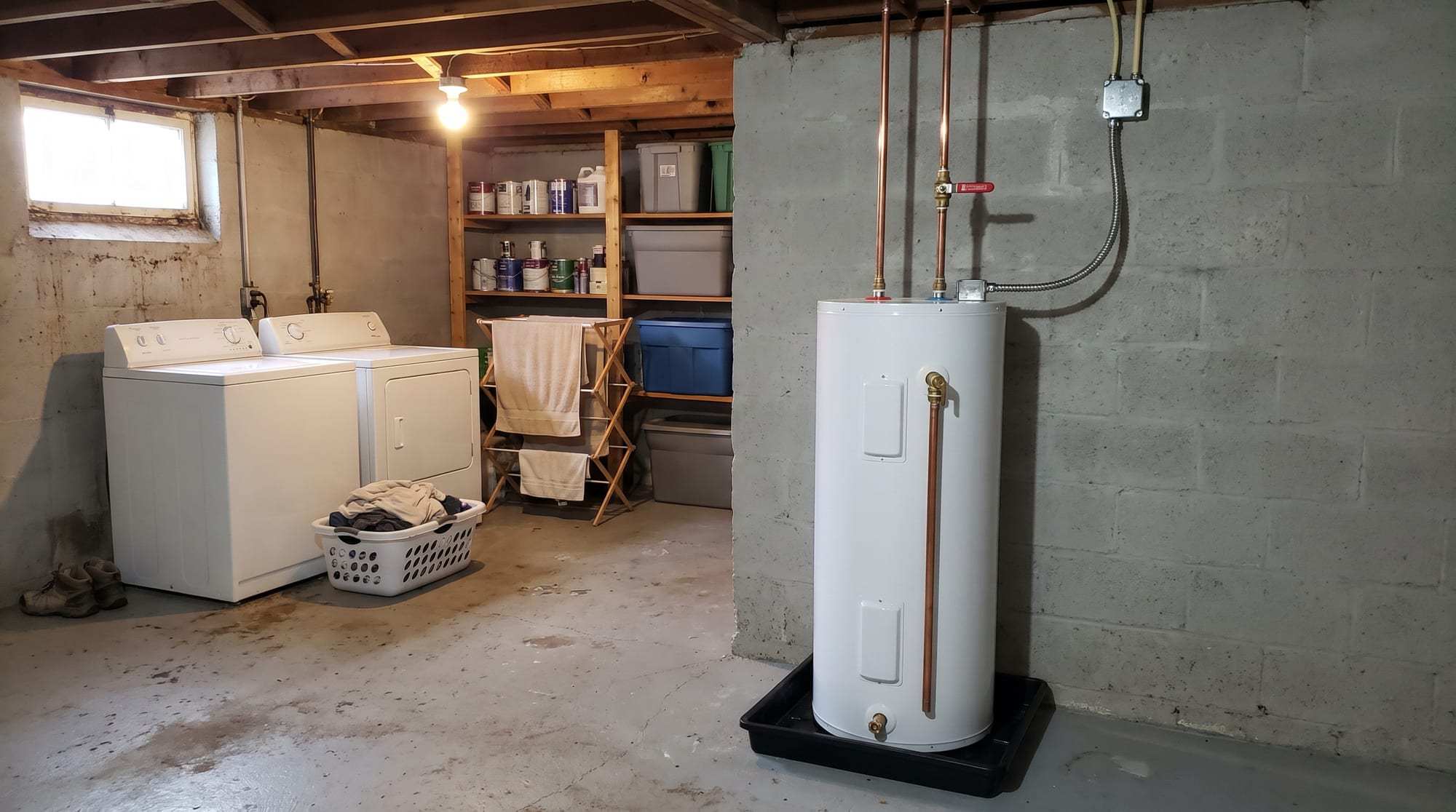
A house with a basement asks the most of its plumbing at two points in the year. The first hard freeze finds every pipe that runs through a cold space. The spring melt raises the groundwater around the foundation and puts the sump pump to work. Most seasonal upkeep is aimed at those two moments.
Much of it takes a flashlight and a few minutes: draining an outside faucet, finding the main shutoff, pouring a bucket of water into the sump pit. Some of it belongs to a plumber: a relief valve that drips, a sump pump that needs a new check valve, a frozen pipe inside a wall.
The water heater works all year, but winter is its hardest season. The water coming in is colder, so every gallon takes longer to heat, and showers run longer. A tank that already struggles usually shows it first in the coldest weeks.
Plumbing Maintenance Calendar
Choose a month and press “Show the Tasks”.
Before the First Hard Freeze
Water expands as it freezes. Inside a pipe, the ice pushes the trapped water ahead of it, and the pressure can split the pipe a short way from the frozen spot. The split often leaks only after the thaw, so the damage shows up days later. Before the first night of hard frost:
- Disconnect every garden hose. A hose left on holds water in the faucet, even in a frost-free one.
- Where an outside faucet has its own shutoff inside the basement, close it, then open the outside faucet to drain the line.
- Find the main shutoff, usually where the water line comes through the basement wall, and turn it gently to make sure it moves. A valve that will not budge is a repair to make now, not during a leak.
- Insulate pipes that run through cold places: the garage, a crawl space, an unheated porch or laundry room, the rim joist on top of the foundation wall. Foam sleeves suit most runs; heat cable made for water pipes suits the worst spots.
- Seal gaps where pipes, wires or the dryer vent pass through outside walls, and fix cracked basement window panes. Moving cold air chills a pipe much faster than still air.
- Remember which lines ran cold last winter. A pipe that froze once will freeze again until something changes.
Early Warnings of a Freezing Pipe
Pipes rarely freeze in the open, heated middle of a basement. They freeze where heat does not reach them: a kitchen line inside an outside wall, a bathroom over the garage, a crawl space, the rim joist behind a finished basement ceiling. A cold snap that drops the temperature fast and holds it there for days finds those spots first. Watch for:
- a faucet that slows to a trickle or sputters while the others run normally;
- frost on an exposed pipe, or a pipe that bulges;
- a toilet that refills slowly after a flush.
Leave that faucet open and keep heat on the area. Never put an open flame to a pipe. If water appears, or the frozen section is out of reach inside a wall or ceiling, close the main shutoff and follow the burst pipe steps.
Spring Melt: Sump Pump, Floor Drain and Outside Faucets
When the snow melts and the spring rains start, the ground around the foundation fills with water. The sump pump runs far more often than in the fall, sometimes every few minutes. That is normal. A pump that runs without stopping, or a pit that stays full, is not.
Check the outdoor end of the discharge pipe. It should be clear of ice and snow and carry the water well away from the house. Water dumped beside the foundation soaks back down to the pit, and the pump moves the same water again and again.
Pour a bucket of water into the basement floor drain to refill its trap, and watch it drain away. A floor drain that backs up in heavy rain points to a blockage in the main drain line, which is drain cleaning work rather than a sump repair.
Turn the outside faucets back on only after the hard freezes are over, and check the basement behind each one the first time you use it.
Questions on Cold Snaps, Sump Pumps and Spring Leaks
How can I keep pipes from freezing during a cold snap?
Keep room heat on the pipes and keep water moving in them:
- Leave the heat on in every room with pipes, including rooms you are not using, and keep the garage door shut if water lines run through the garage.
- Open the cabinet doors under sinks on outside walls, so warm air reaches the pipes.
- On the coldest nights, let the faucet farthest along a cold line run a thin, steady trickle of hot and cold.
- Block drafts that hit a pipe directly: a cracked basement window, a gap at the rim joist, a loose dryer vent.
For a winter trip, keep the thermostat at about 55 °F or higher. For a longer absence, closing the main shutoff and draining the lines removes most of the risk.
How do I check that a sump pump still works?
Lift the pit cover and pour in water slowly, a bucket or two, until the float rises. The pump should start on its own, lower the water to its usual level and shut off. Then look outside at the end of the discharge pipe: the water should come out there, away from the foundation. Keep your hands out of the pit while the pump is plugged in.
Call a plumber if the pump hums but moves no water, starts and stops every few seconds, keeps running with the pit empty, or lets water run back into the pit each time it stops, which usually points to a failed check valve. Test it before the snow melts and again before a stretch of heavy rain.
What time of year should the water heater be flushed?
Once a year suits most tank heaters, and early fall is a sensible time. The tank then goes into the cold months clean, just as colder incoming water makes it work longest. Spring works too; doing it every year matters more than the month.
A tank that has gone years without a flush is a different case. Sediment can clog the drain valve, and an old plastic valve may not close tightly again once it has been opened. For a heater past about ten years old, or one that rumbles as it heats, weigh repair or replacement before draining it.
Why do leaks often show up in the spring?
A pipe can freeze and crack in January and stay dry until the ice in it melts or the line is used again. Outside faucets are the usual case: a hose left on over the winter keeps water in the faucet’s long stem, the stem splits inside the wall, and the leak starts the first time the hose is turned on in spring.
The first time you use each outside faucet, run it for a minute and check the basement wall or ceiling behind it for drips. Water that seeps in along the foundation walls after a thaw or heavy rain is groundwater, a drainage and sump pump matter rather than a pipe leak. A split pipe or faucet calls for a leak repair before the water soaks into the drywall.
Plumbing Upkeep Season by Season
Each season has one or two jobs that matter more than the rest. Most take a homeowner a few minutes; a few turn into plumbing work when a part has failed.
| Season | Task | Why It Matters | Who Should Do It |
|---|---|---|---|
| Fall | Disconnect the hoses and drain the outside faucets | Water left in a faucet can freeze and split it inside the wall | You, before the first hard freeze |
| Fall | Flush the water heater | Clears sediment before the tank’s hardest months | You, if the drain valve opens and closes cleanly; a plumber for an old or stuck valve |
| Winter | Keep heat on pipes in outside walls and cold rooms | Pipes freeze where room heat does not reach them | You, through every cold snap |
| Winter | Watch for slow faucets and frost on pipes | Both are early signs of a pipe starting to freeze | Anyone at home can spot them; a plumber for a pipe frozen inside a wall |
| Spring | Test the sump pump | Snowmelt and spring rain raise the groundwater it has to move | You can test it; a plumber for a pump that hums, keeps cycling or never stops |
| Spring | Run each outside faucet and check inside for drips | A faucet that split over the winter leaks only when the water is on | You check; a plumber replaces a split faucet |
| Summer | Check the washing machine hoses | Rubber hoses bulge and crack with age and can burst under pressure | You can swap a hose; a plumber for leaking valves behind the washer |
| Summer | Look for drips under cold water pipes | Cold pipes sweat in humid weather, and the drips can pass for a leak | Pipe insulation, fitted yourself, stops the drip |
For a sump pump that will not start or an outside faucet split by the frost, call (440) 581-1393.