
Our Plumbing Process
How a repair or replacement goes, step by step, and the code and safety rules that shape the work.
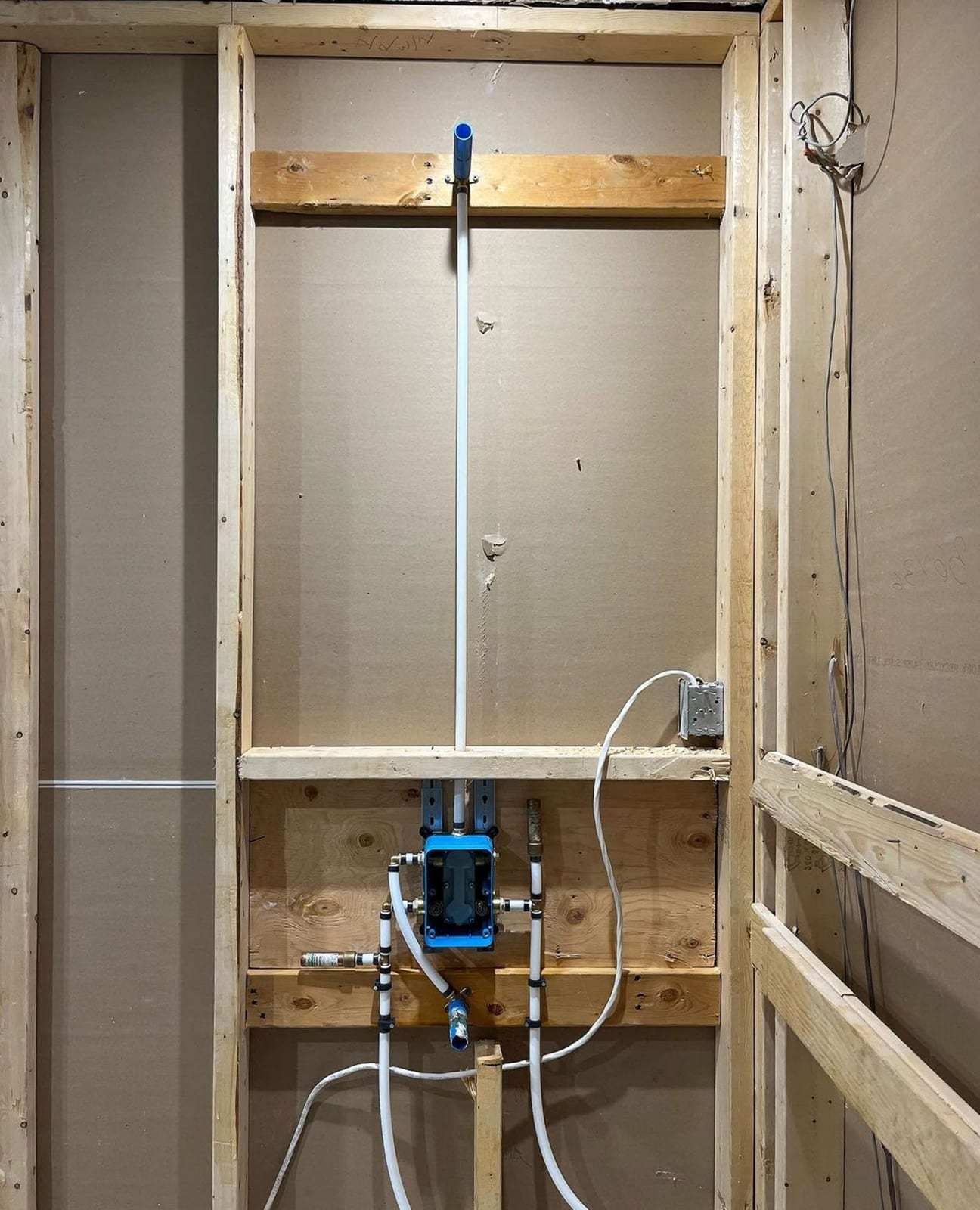
A plumbing job goes in four steps: find the cause, choose the fix, do the work, and test it. The order matters because a plumbing problem often shows up in one place while its cause sits somewhere else. A repair aimed only at the symptom tends to come back.
The steps are the same for a dripping shutoff valve and for a whole-house repipe. What changes is how long each one takes, and whether the work needs a permit and an inspection along the way.
Behind every step sit the rules of the trade: the plumbing code, the safety rules for gas lines and water heaters, and the permits and inspections that check the work while it can still be seen.
The Four Steps of a Plumbing Job
Assessment: Finding the Cause
The plumber starts with questions. When did the problem begin? Which fixtures does it affect? Does it come and go? Then the search follows the water: a slow drain is checked at the fixture, along the line and up to the vent, and a stain is traced along the joists and pipes to where the water gets in.
For you, this step means showing the way to the problem, the main shutoff and the water heater, and answering questions about the house. It ends with a plain account of what failed and why.
Options: Choosing the Fix
Most faults have more than one fix. A leaking joint can be remade, a corroded section replaced, or an aging supply system repiped. A failing water heater can get a new part or a new tank. The choice turns on the age and material of what is there, how often it has failed, and how much of the house the work would open up.
The decision is yours. Each option should come with what it involves: how long the water would be off, whether a wall or ceiling has to be opened, and how long the fix should last. On old pipes, a short-term repair can be a sensible first step, as long as everyone knows it is short-term.
The Work: Water Off, Lines Drained, Parts Fitted
Work on a supply line starts by closing the nearest shutoff, or the main, and draining the line. A gas appliance is shut off at its own valve before it is disconnected. Drain work may mean running a cable through a cleanout, or opening the line to replace a section.
Expect the water to be off for part of the visit, in one room or in the whole house. When a pipe runs inside a finished wall or ceiling, a plumber opens only as much of it as the repair needs. On a job with a permit, new piping may have to stay exposed until the inspector has seen it.
Testing Under Real Use
The last step puts the repair under real use, with the water back on. Expect water to run in every room for a while: faucets opened hot and cold, toilets flushed, tubs and sinks filled and let go. If anything leaks or drains slowly, it is fixed and tested again.
Plumbing Code and Safety Rules Behind the Work

Plumbing in Ohio follows the state’s plumbing code. It is enforced locally, through the building department or, in some communities, the health department’s plumbing office, and that office decides which jobs need a permit and an inspection.
A water heater replacement shows how many rules can meet on one job: the relief valve and its discharge pipe, the vent on a gas unit, the gas connection, an expansion tank where one is needed, and often a permit and an inspection.
| Topic | General Rule | Why It Matters | Work It Applies To |
|---|---|---|---|
| Permits and inspections | Where the local rules call for a permit, it is taken out before the work starts, and the inspection comes before the work is covered. | Hidden or safety-related work gets checked while it can still be changed. | New or moved piping, water heaters, sewer connections |
| Shutting off and draining | Water is shut off and the line drained before a pipe is opened. | An open line under pressure floods the room, and a wet pipe makes a weak joint. | Supply lines, valves, fixtures, water heaters |
| Relief valves and venting | A tank heater needs a relief valve piped down toward the floor, never capped; a gas heater needs a vent that draws. | The valve lets out dangerous pressure; the vent carries exhaust gases outside. | Water heater installs and replacements |
| Gas lines and carbon monoxide | Gas piping is leak-tested after any change, and gas appliances are checked for proper venting. | A leak can start a fire; a blocked vent can fill a house with carbon monoxide. | Gas water heaters and their connections |
| Backflow prevention | An air gap, a vacuum breaker or a backflow preventer guards drinking water wherever dirty water could flow back. | A pressure drop can siphon water from a hose or a boiler into the drinking supply. | Outside faucets, boilers, lawn sprinklers |
| Traps and vents | Every fixture drain has a trap holding a water seal, and the drains are vented to open air. | The seal keeps sewer gas out; vents let drains flow and keep traps from siphoning dry. | Drain work, fixtures added or moved |
| Approved materials and lead-free fittings | Pipe, fittings and solder must be approved for their use, and parts that carry drinking water must be lead-free. | The wrong material fails early; lead in drinking water harms health, above all children’s. | Supply lines, faucets, valves, soldered joints |
Permit and Inspection Questions
How do I know whether a plumbing job needs a permit?
Ask the local office that issues plumbing permits: the building department, or in some communities the health department. The rules differ between cities and townships, but new or moved piping, a water heater replacement and a sewer connection are the kinds of work that tend to need a permit. A like-for-like repair, such as a new faucet on the same lines, often does not.
Where a permit is needed, it is usually taken out by the plumbing contractor doing the work, since the inspection checks that work.
What does a plumbing inspector look at, and what does the homeowner need to do?
The inspector checks the work against the code: the pipe and fittings used, the slope of the drain lines, the venting, how the pipes are supported, and on a water heater the relief valve, its discharge pipe and the vent. New piping is often inspected at rough-in, with the walls still open, and again once the fixtures are in.
For the homeowner, an inspection mostly means letting the inspector in and leaving the work uncovered until it passes. If the inspector asks for a change, the change is made and the work is looked at again before it is closed up.
Why does an inspection matter if the plumbing already works?
Plenty of faults work on the first day: a drain with too little slope, a missing vent, a relief valve piped where it cannot drain, a gas fitting with a slow leak. They show up later as slow drains, sewer smells, water damage or worse. An inspection is a second look while the work is still easy to reach.
Permit records can also come up when the house changes hands, so keep the paperwork with the house records.
Testing: What Gets Checked at the End
Before a job is called finished, every fixture is run, each joint is checked for seepage, and the drains are tested under full flow. Together with a pressure test, that makes four checks:
- Pressure test. New piping is put under pressure and watched for a drop before it is covered; an inspector may ask to see the test. Repaired lines go back under full pressure with every faucet closed.
- Leak check. Each joint is checked for seepage. A slow seep shows as a damp spot or a bead of water long before it drips, so each joint gets a close look.
- Drain flow. Drains are tested under full flow, with sinks and tubs filled and released and toilets flushed, so a partial blockage or a weak joint shows up under real load.
- Fixture operation. Every fixture is run: hot and cold at each faucet, the shower valve through its range, each toilet refilling and shutting off, the water heater heating with its relief valve dry.
New crew members learn the work in the same order. They start by watching how a fault is traced, then take on simple repairs while their work is checked, until they can explain what caused the problem.
When something in your house needs this kind of attention, Schedule Service with a short description of what you have noticed.